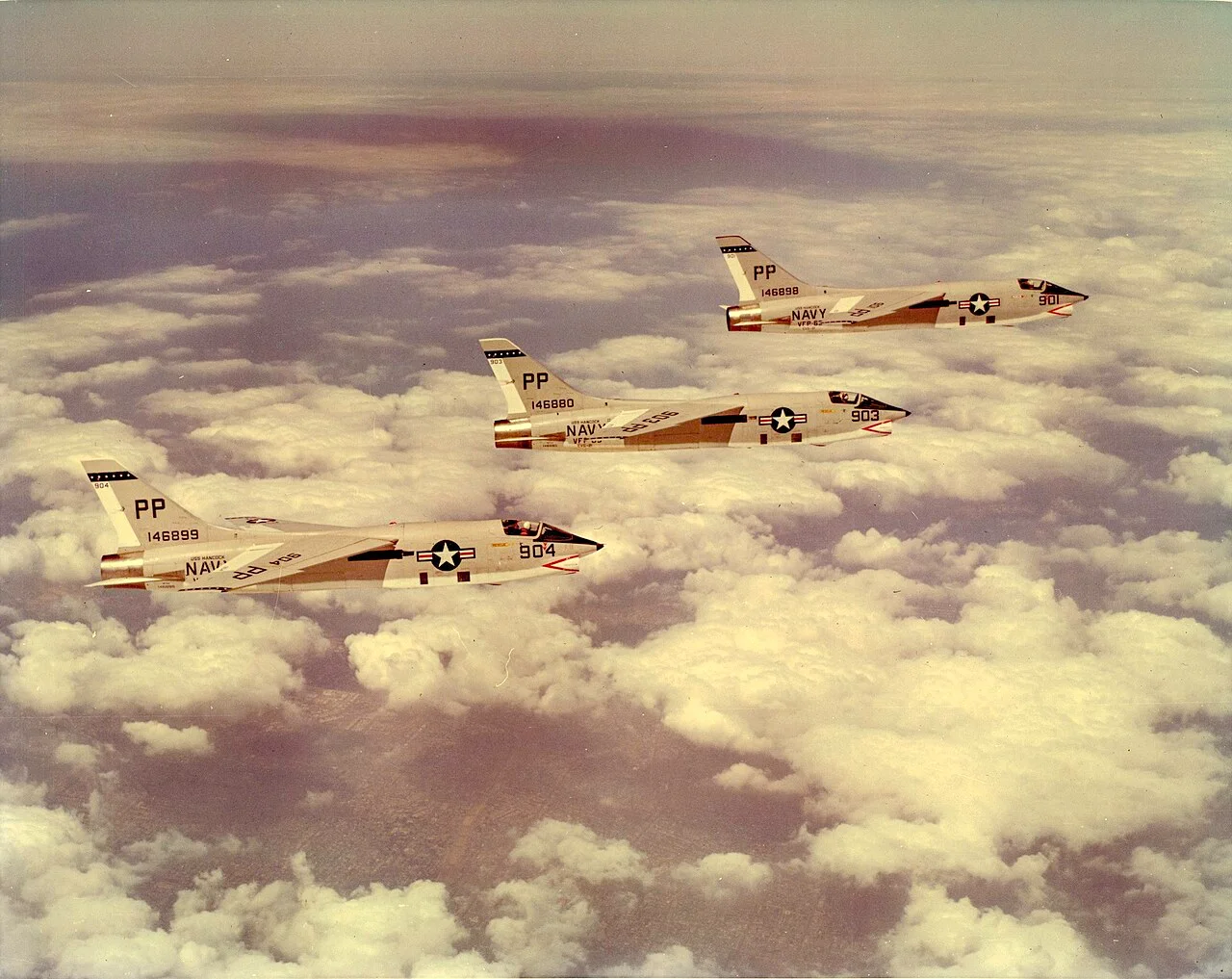

- Operator:
- US Navy, including VFP-62
- Type:
- Single-engine reconnaissance aircraft
- Role:
- Low-altitude photography
- First low-level missions:
- 23 October 1962
Its place in the crisis
The RF-8A was the reconnaissance version of the F-8 Crusader fighter. VFP-62 pilots began low-level missions over Cuba on 23 October, obtaining views that complemented the high-altitude U-2 imagery.
Lower-level photographs helped interpreters inspect individual installations and equipment. They also exposed the crews to ground fire. The contrast between U-2 coverage and RF-8A detail explains why the intelligence effort used more than one kind of aircraft.
Sources for this passage: [1] [2] [3]Operation Blue Moon
Low-level Navy photographic missions began on 23 October under the name Blue Moon. VFP-62, the Light Photographic Squadron associated with the flights, used the reconnaissance Crusader to obtain close views of missile installations and equipment. The aircraft also appears in period records under its earlier designation, F8U-1P.
These missions served a different photographic purpose from the U-2’s high-altitude survey. Low-level views could show details of individual objects and activity around a site. Kennedy later presented the squadron with a Navy Unit Commendation, recognising the contribution of the reconnaissance effort.
Sources for this passage: [1]Detail at the cost of exposure
Photographs remained necessary after the quarantine began because stopping shipping did not stop work on weapons already ashore. By 26 October, the intelligence picture still showed continuing construction. The practical question was whether each passing day gave the Soviet force a greater ability to launch.
Low-flying reconnaissance aircraft were exposed to ground fire. At the 27 October ExComm meeting, reports of aircraft being fired on fed directly into discussion of possible retaliation and larger air operations. Gathering information could itself create the next military incident.
Sources for this passage: [4] [5]