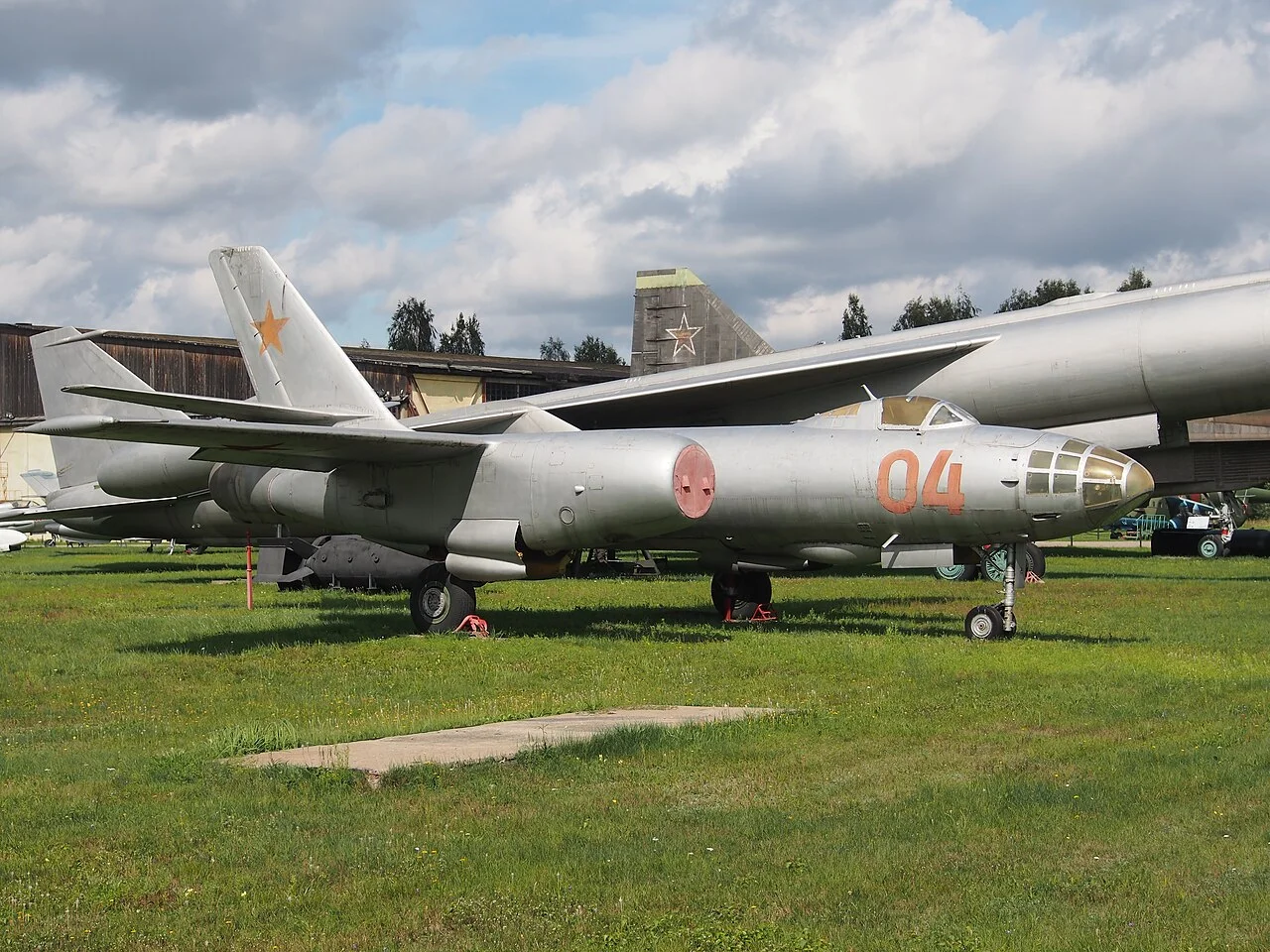


- Country:
- Soviet Union
- Type:
- Jet bomber
- Western reporting name:
- Beagle
- Crisis status:
- Present in Cuba; withdrawal negotiated afterwards
Its place in the crisis
The Il-28 was an aircraft, not a ballistic missile. Its presence helped make the dispute over “offensive weapons” broader than the launch sites that first alarmed Washington.
The 28 October announcement did not settle every issue concerning the bombers. Negotiations over their removal continued into November, illustrating why the familiar thirteen days are only the central phase of a longer crisis.
Sources for this passage: [1] [2]What the photographs revealed
Intelligence continued to follow the uncrating and assembly of Il-28 bombers while the missile dispute developed. During the 20 October discussions, Taylor drew attention to bombers exposed on airfields as possible air-strike targets. Kennedy initially distinguished the political significance of the strategic missiles from that of the aircraft.
That distinction did not make the bombers irrelevant. Their inclusion in the dispute over offensive weapons created another question to settle after Khrushchev agreed to remove the missiles. A headline announcing the end of the crisis could conceal an unfinished negotiation about a different weapons system.
Sources for this passage: [3] [4]Why November belongs in the story
The Soviet deployment also included six nuclear bombs intended for specially equipped Il-28 aircraft. The presence of those bombs should not be confused with proof that every Il-28 in Cuba was assembled, nuclear-armed and ready for a mission.
Khrushchev decided in November to withdraw the bombers, while Mikoyan worked through the wider dispute with Castro. The associated nuclear bombs departed with the remaining tactical warheads on 1 December. Aircraft removal, nuclear-warhead removal and the public missile agreement were separate stages.
Sources for this passage: [5] [6]