A photograph is only the beginning
A U-2 reconnaissance flight over Cuba on 14 October photographed missile installations under construction. American photographic interpreters examined the shapes, dimensions and arrangement of equipment. Their findings reached President Kennedy on the morning of 16 October.
The crucial evidence was a developing military system: missiles, launch equipment and supporting activity. Analysts had to translate marks on photographs into a judgement about weapons and readiness.
Sources for this passage: [1] [2]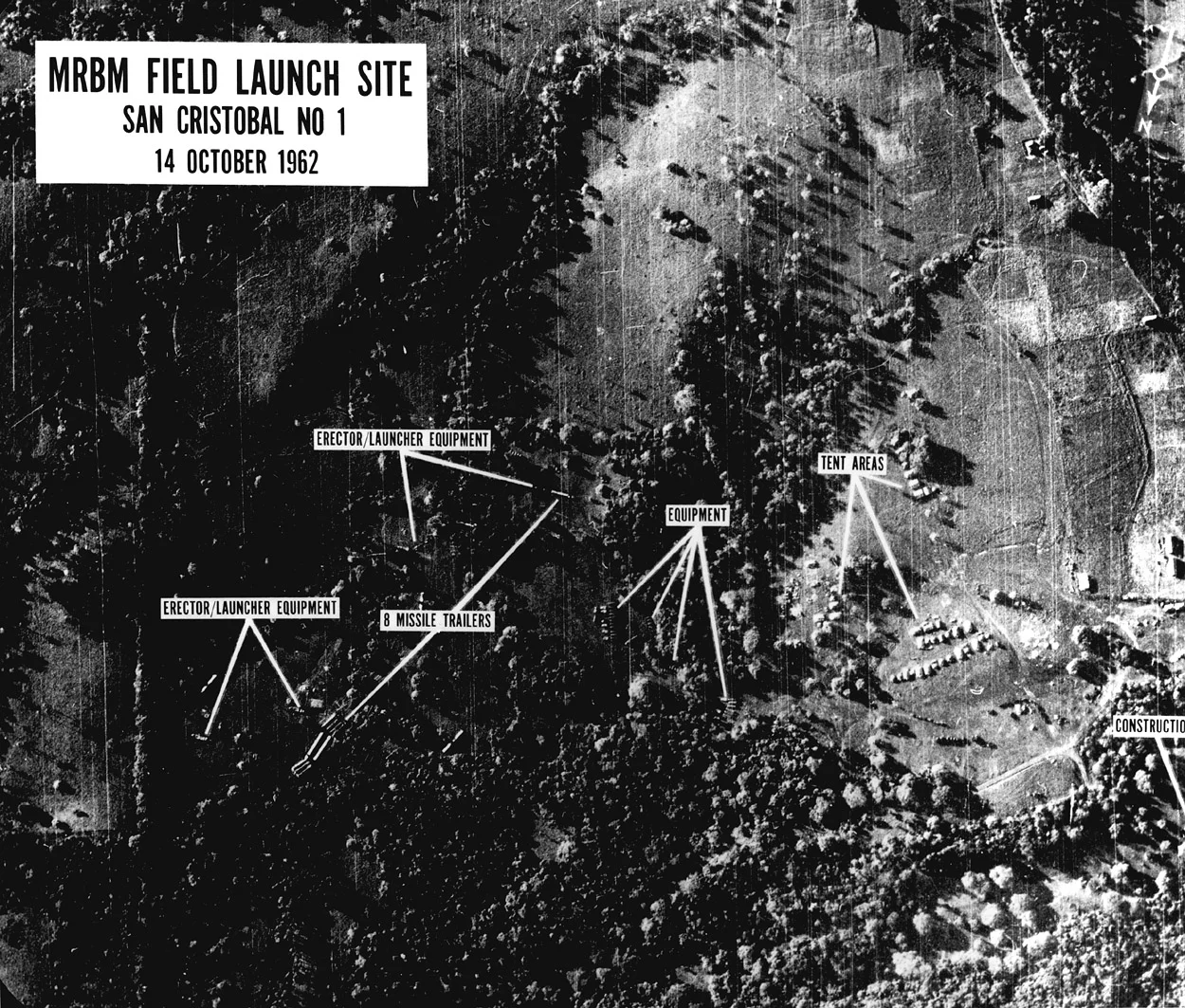


Evidence with limits
The first White House discussions reveal how much remained uncertain. Advisers debated the location of nuclear warheads, how soon missiles could be launched, and whether an attack could destroy them all. Photographs did not provide direct access to Soviet orders or intentions.
Intelligence estimates should be read as assessments made at a particular time. A site under construction, a missile present and a weapon ready to fire describe different stages; they should not be used interchangeably.
Sources for this passage: [3]From intelligence to policy
Additional reconnaissance expanded the picture. It also created danger: flights crossed Cuban airspace and faced air defences. General Walter Sweeney warned Kennedy on 21 October that an air strike could not guarantee the destruction of every missile.
The photographs became diplomatic evidence as well as military intelligence. Adlai Stevenson used imagery in the United Nations debate on 25 October. What had been closely held information was now part of a public confrontation.
Sources for this passage: [4] [5] [6]