October 1962 · Cuba, the superpowers and Britain
The Cuban
Missile Crisis
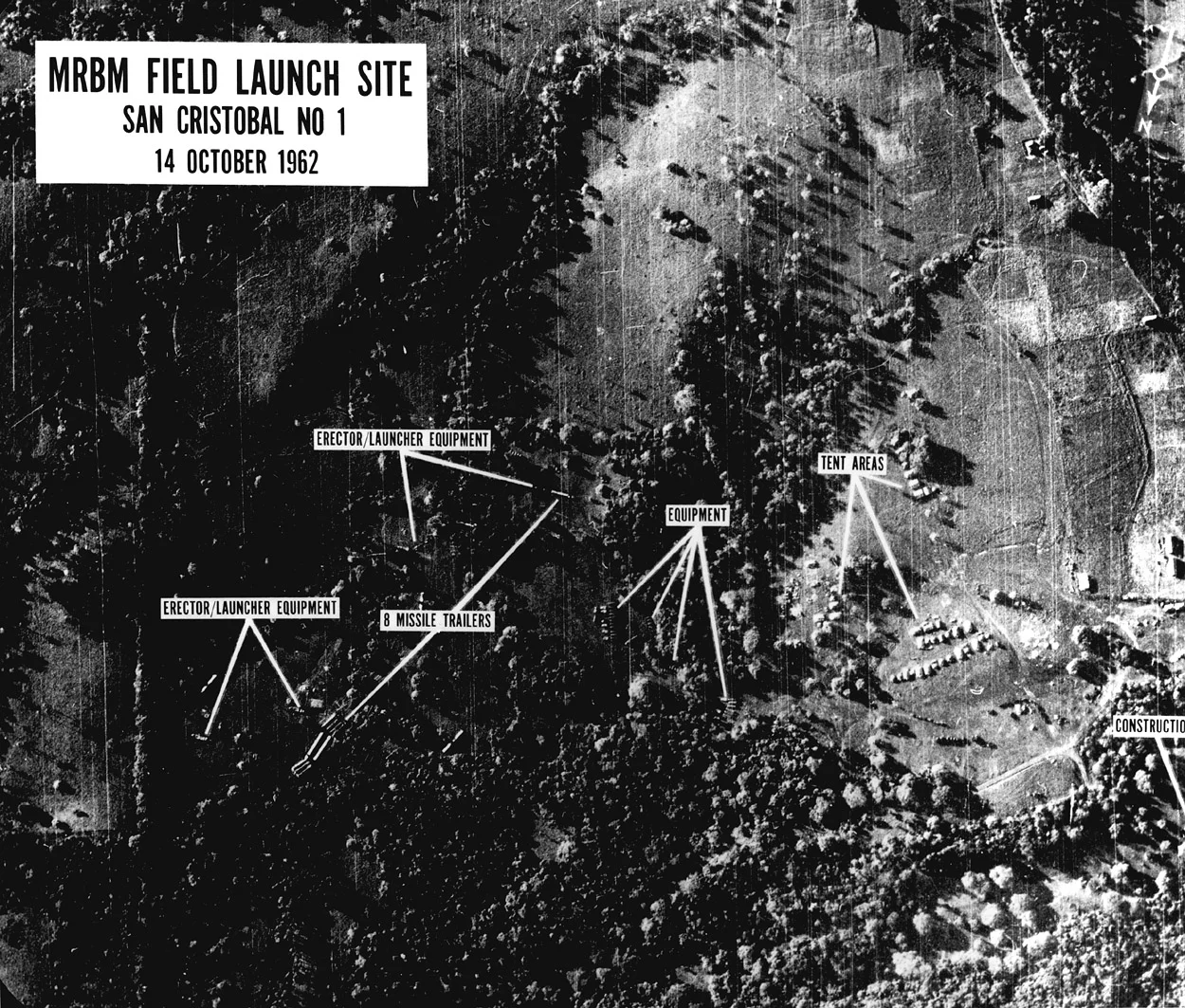
American photographs revealed Soviet nuclear missile installations in Cuba in October 1962. Kennedy chose a naval quarantine while the two governments negotiated a settlement.
Sources for this passage: [1] [2]Follow the decisions in Washington and Moscow, Cuba’s experience, and Britain’s involvement—from the background to the aftermath.
The sequence · 1962
From discovery to withdrawal
Six moments to orient the story. The thirteen days of White House deliberations sit within a longer history of confrontation and settlement.
Photographed
A U-2 records missile installations in Cuba.
Sources for this passage: [2]Kennedy briefed
The President and his advisers begin considering a response.
Sources for this passage: [3]The world is told
Kennedy announces the missiles and a naval quarantine.
Sources for this passage: [1]Black Saturday
A U-2 is shot down over Cuba as negotiations continue.
Sources for this passage: [1]Withdrawal agreed
Khrushchev announces that the missiles will be removed.
Sources for this passage: [1]Quarantine lifted
The work of implementing the settlement extends beyond October.
Sources for this passage: [1]
For the detailed sequence: follow each day, 16–28 October →
The story · Six chapters
Read from the beginning
Begin with the background, then follow the evidence, the choices and the consequences.
Before October
Revolution in Cuba, the Bay of Pigs, Operation Mongoose and the Soviet decision to deploy nuclear missiles.
Discovering the missiles
How reconnaissance photographs became evidence of Soviet nuclear missile deployments—and what they could not reveal.
The naval quarantine
Why Kennedy chose a naval interception operation, how it worked, and why diplomacy remained essential.
Black Saturday
A U-2 shot down, another lost over Soviet territory, a submarine encounter, and urgent negotiations.
The settlement
The public agreement, the private assurance about Turkey, and the work still unfinished on 28 October.
After October
Why the settlement took weeks to implement, and how the crisis changed efforts to manage nuclear danger.
Beyond Washington and Moscow
Cuba and Britain in the crisis
For Kennedy, Soviet missiles in Cuba were an unacceptable threat. For Khrushchev, their deployment could protect an ally and alter the nuclear balance. For Castro, the prospect of another American invasion was real.
Sources for this passage: [4] [5] [6] [7]Look closer
Explore the evidence
The photographs
Examine original reconnaissance photographs, with numbered guides to the features identified by analysts.
Read the photographs →The geography
Explore missile areas, dated ship positions and range estimates, with the limitations of each map explained.
Cuba crisis map →Thor and Jupiter in Europe →
The record
Follow the documents, explore the equipment, and compare later portrayals with the historical record.
Sources and documents →Missiles, aircraft and ships →
Films and documentaries →
Sources for this page9 references
Numbers refer to the passages above. Open a title to read the source, or use a return link to go back to its citation.
- Office of the Historian: The Cuban Missile Crisis, October 1962↩ 1↩ 2↩ 3↩ 4↩ 5
- National Archives: San Cristóbal reconnaissance photograph, 14 October 1962, PX1966-020-007↩ 1↩ 2
- JFK Library: 16 October 1962, chronology and documents↩ Back to text
- JFK Library: The Bay of Pigs↩ Back to text
- FRUS XI, document 10: Operation Mongoose, 8 October 1962↩ Back to text
- National Security Archive: Nuclear Crisis Lasted 59 Days, Not Just 13↩ Back to text
- Khrushchev to Kennedy, 27 October 1962↩ Back to text
- RAF Historical Society Journal 32: Thor range, deployment and station table, pp. 74–81↩ Back to text
- Historic England: RAF Harrington Thor missile site, list entry 1400809↩ Back to text