What happened
Kennedy signed the quarantine proclamation. Adlai Stevenson brought the issue before the UN Security Council, and Robert Kennedy met Anatoly Dobrynin. Leaders faced a practical problem as well as a political one: how to avoid a clash between ships becoming the start of a wider war.
Sources for this passage: [1]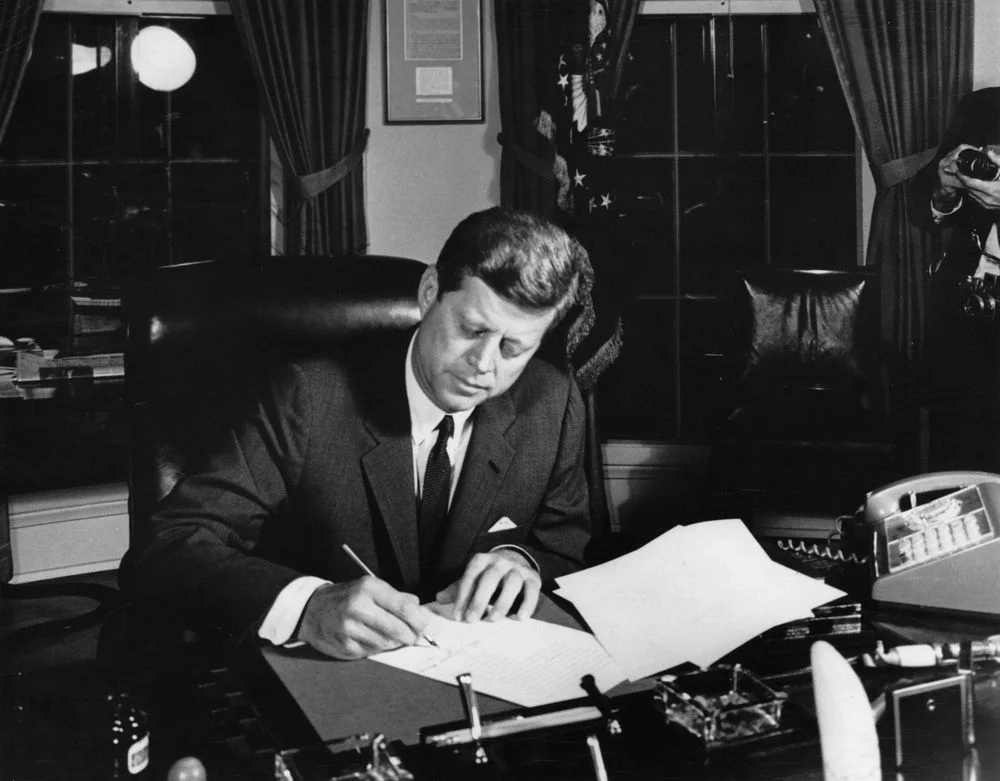


Legal authority, diplomacy and closer photographs
The Organization of American States supported the response, and Kennedy signed the proclamation setting out the interdiction of offensive military equipment. Naval enforcement was to begin the following morning. This made the cargo being carried, as well as a ship’s identity, central to the instructions at sea.
Navy low-level photographic flights began under Operation Blue Moon, supplying more detailed views of the installations. In Washington, Robert Kennedy met Dobrynin at the Soviet embassy. Military observation and diplomatic contact thus intensified together: the administration wanted both a better picture of the threat and a way to communicate its demands.
Sources for this passage: [2] [3] [1]