
- Country:
- Soviet Union
- Type:
- Land-based, nuclear-capable ballistic missile
- Crisis status:
- Deployed in Cuba
- Key connection:
- Photographic discovery, 14–16 October
Its place in the crisis
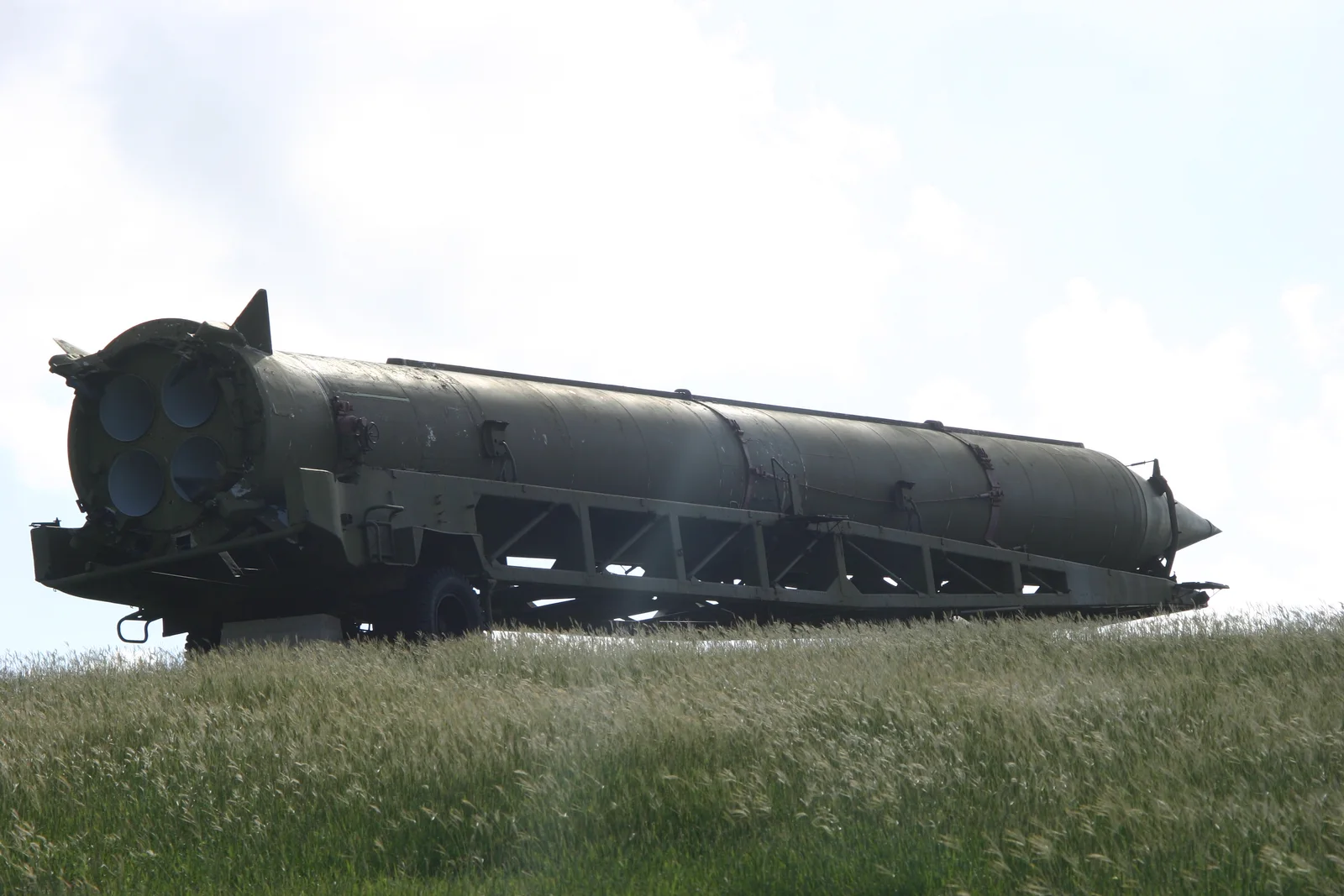
The R-12 was known to NATO as the SS-4 Sandal. It was a surface-to-surface weapon: after a powered climb, its warhead followed a ballistic trajectory towards a ground target. Its purpose was strategic attack, unlike the air-defence missiles protecting the deployment.
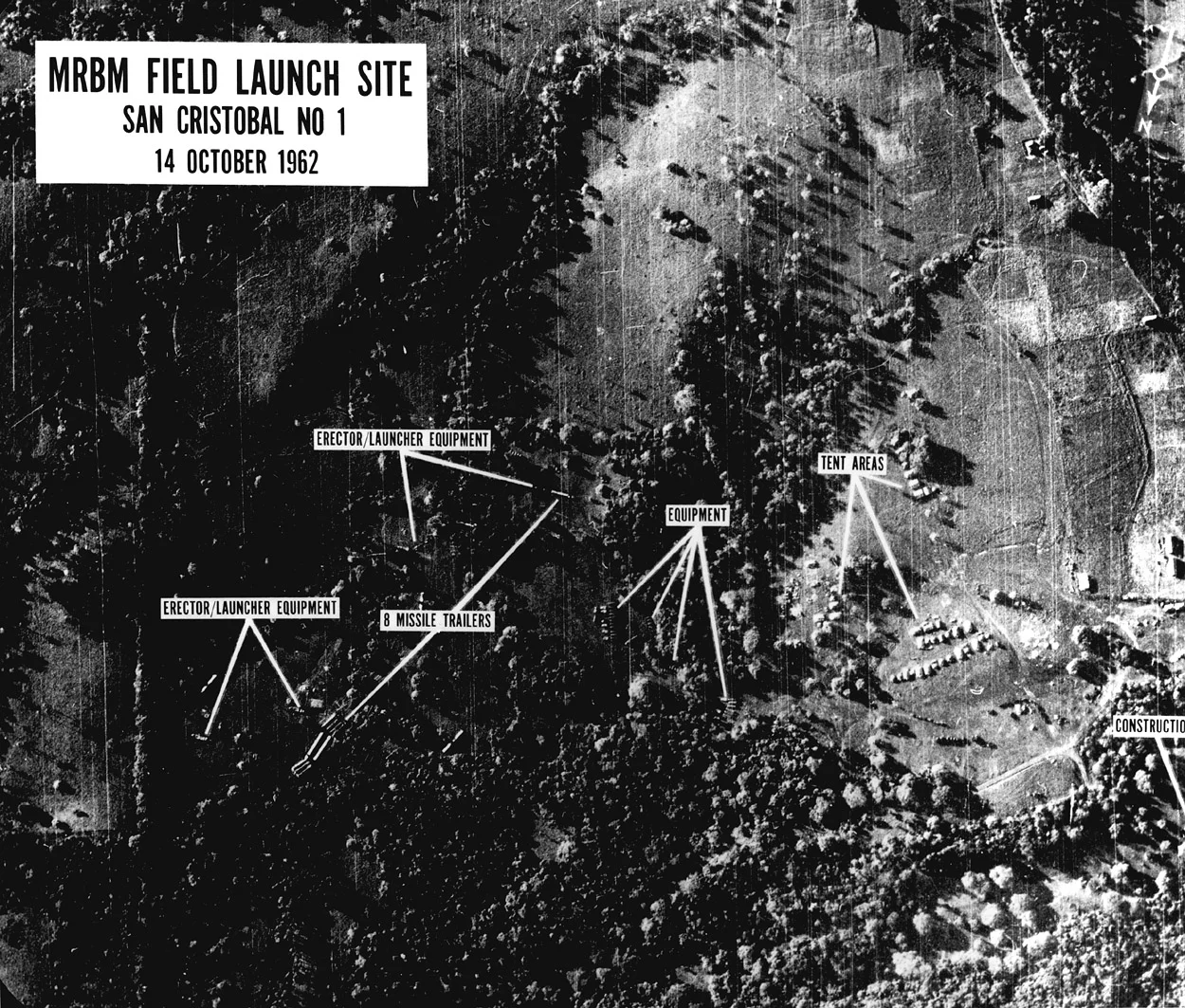
Reconnaissance photographs showed missile-related equipment and launch-site construction around San Cristóbal. Photographs could reveal the installation without telling Washington everything about the location or readiness of the nuclear warheads. That gap between observation and knowledge runs through the crisis.
The agreement of 28 October required the offensive missiles to be removed. It did not make the dismantling, shipping and verification instantaneous.
Sources for this passage: [1] [2] [3]From a photograph to a military threat
The missile deployment required far more than a rocket: launch equipment, transporters, crews, communications and nuclear warheads all had to be brought together. Interpreters identified patterns in the site layouts and vehicles, then compared later photographs to see whether construction was advancing. San Cristóbal became one of the best-known locations because the 14 October coverage revealed the deployment there.
At the 20 October National Security Council meeting, the intelligence briefing described sixteen SS-4s as operational and gave their range as 1,020 nautical miles, approximately 1,890 kilometres. This was an American estimate made during the crisis. In the same meeting, CIA director John McCone acknowledged that Washington still lacked positive confirmation that the nuclear warheads had arrived.
Sources for this passage: [4] [1]Why an air strike was no simple answer
A strike had to find and destroy the launch capability, not merely crater a few photographed positions. McNamara warned that surviving missiles and launchers could still be used. Waiting also carried a cost: crews could complete more sites and improve concealment. Kennedy therefore faced a conflict between allowing time for diplomacy and preventing the force from becoming harder to remove.
After the settlement, observation shifted from construction to dismantling and shipping. American intelligence confirmed the removal of forty-two medium-range missiles through sightings on departing cargo ships. That figure describes missiles shipped out; it should not be substituted for the number of launchers or missiles ready to fire on a particular October day.
Sources for this passage: [4] [5]More views