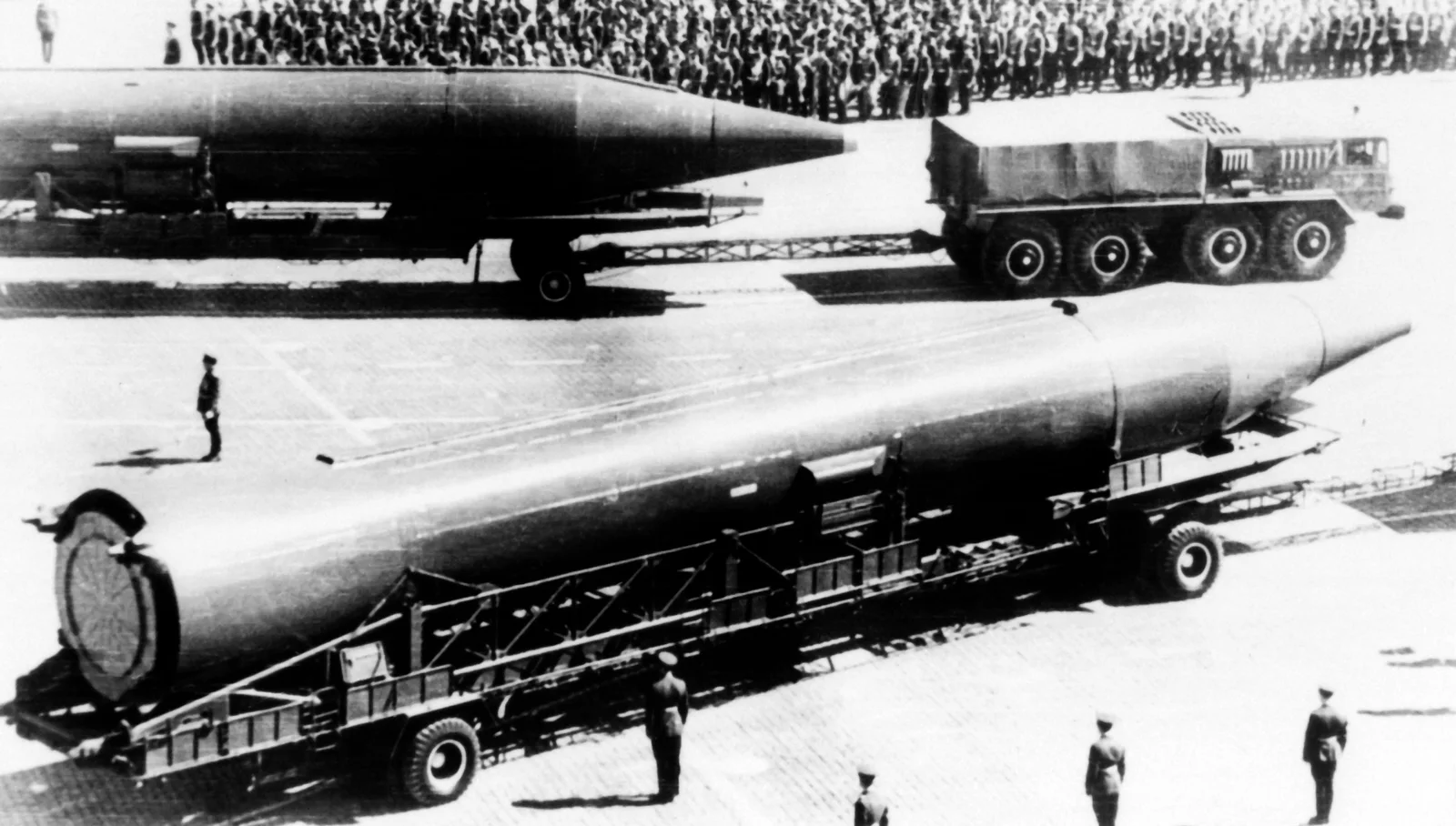


- Country:
- Soviet Union
- Type:
- Intermediate-range ballistic missile
- Crisis status:
- Sites prepared; missiles did not reach Cuba
- NATO reporting name:
- SS-5 Skean
Its place in the crisis
The planned R-14 deployment extended the intended reach of the Soviet force beyond the R-12. American reconnaissance identified construction and equipment associated with the longer-range system.
The National Security Archive’s document collection distinguishes those preparations from the missiles themselves: the ships carrying the R-14s did not reach Cuba before the quarantine. Warheads intended for them did arrive. It is therefore misleading to draw a map that treats an operational SS-5 force in Cuba as an established fact.
Sources for this passage: [1]The force that was planned
The Soviet plan included two R-14 regiments. The longer-range system would have extended the territory that could be threatened from Cuba, which made evidence of its construction especially alarming. American photographs identified an intermediate-range missile site under construction at Guanajay, west of Havana.
A launch site, however, was not a complete missile unit. The ships carrying the R-14 missiles did not arrive before the quarantine. The Aleksandrovsk reached Cuba carrying the intended warheads, but warheads without the missiles did not create an operational R-14 force.
Sources for this passage: [1] [2]Why the question continued into November
American analysts could not resolve the absence simply by counting the weapons they had photographed. In November, State Department intelligence chief Roger Hilsman continued to examine whether longer-range missiles might have arrived without being detected. His memoranda reveal the difference between later knowledge of the Soviet shipment and the uncertainty officials faced at the time.
For a map of the crisis, the R-14 therefore belongs in a clearly labelled planned-deployment layer. Presenting its potential range as though the missiles were ready to launch from Cuba would exaggerate the force actually in place.
Sources for this passage: [1]