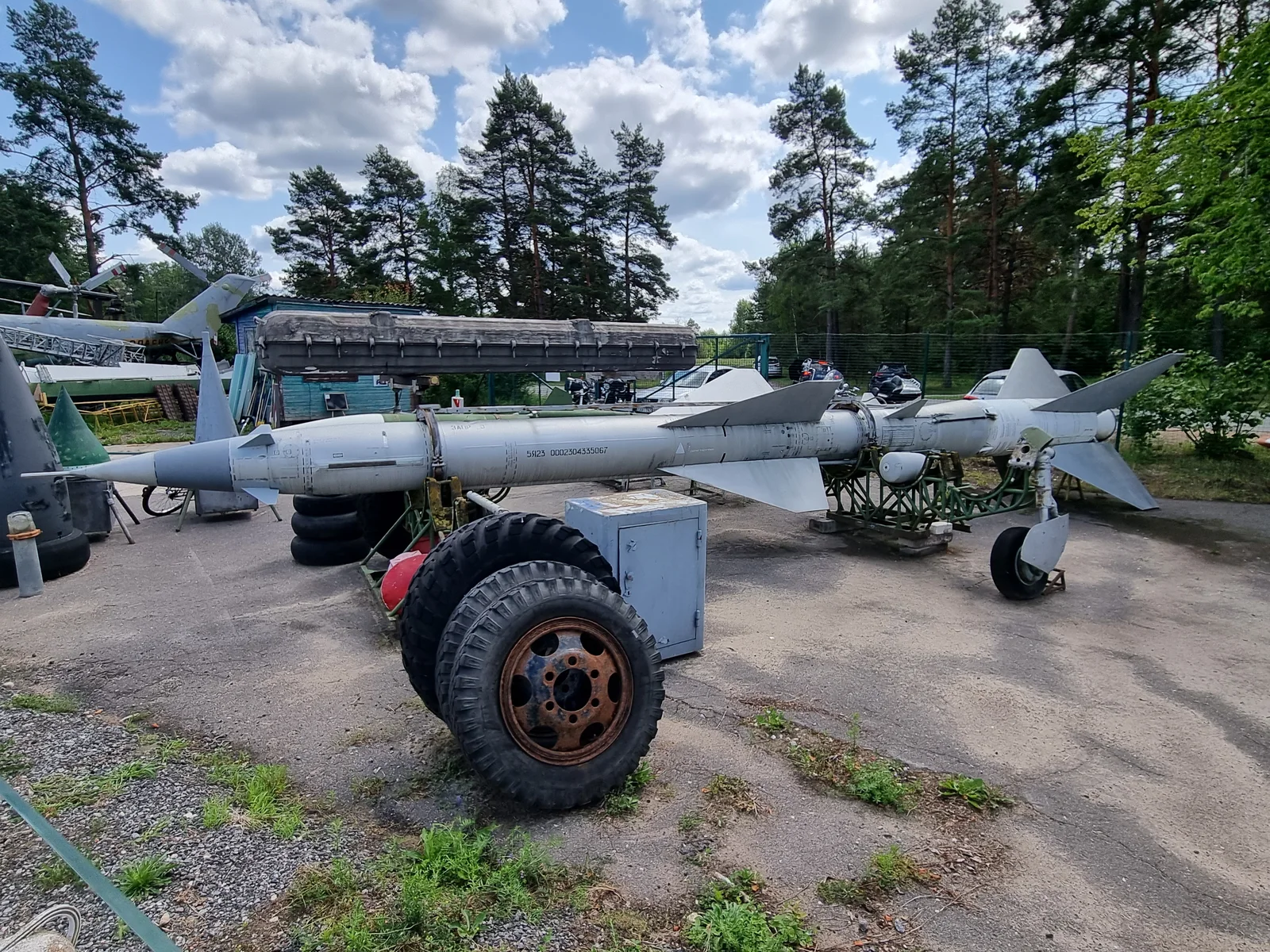

- Country:
- Soviet Union
- Type:
- Radar-guided surface-to-air missile
- Role:
- Air defence
- Key date:
- 27 October 1962
Its place in the crisis
Known in Western reporting as the SA-2 Guideline, this system was intended to intercept aircraft. It was a different weapon from the strategic missiles that Kennedy demanded be removed.
A Soviet SA-2 shot down Rudolf Anderson’s U-2 over Cuba on 27 October, killing him. The loss brought pressure for retaliation, but Kennedy did not immediately order a strike on the missile site. An air-defence engagement thus became a critical test of political control over escalation.
Sources for this passage: [1] [2]Protecting the deployment from observation
Surface-to-air missiles changed the calculation behind reconnaissance. Flying high gave a U-2 a broad view of the island, but height alone could no longer protect it from a radar-directed missile system. Soviet air defences guarded the same island on which American commanders urgently needed repeated photographic coverage.
The distinction between a missile aimed at an aircraft and one aimed at a city mattered politically. Kennedy’s demand to remove offensive missiles did not mean every weapon described as a missile was the same target. Yet attacking an air-defence site could kill Soviet personnel and begin direct fighting between the two powers.
Sources for this passage: [1] [2]The decision after Anderson’s death
On 27 October, the loss of Rudolf Anderson created pressure to attack the responsible SAM site. At the afternoon ExComm meeting, Taylor recommended a strike the following day. McNamara discussed a much broader operation against air defences, aircraft and missile sites, illustrating how quickly a retaliatory attack might expand.
Kennedy deferred the decision. He directed that reconnaissance should continue the next day without fighter escort, while reserving the response to further fire. The restraint did not remove the danger; it kept a local engagement from automatically deciding the diplomatic outcome.
Sources for this passage: [3] [4]