

- Country:
- United States; deployed in Britain
- Type:
- Intermediate-range ballistic missile
- Force:
- 60 missiles at 20 RAF stations
- Control:
- British operations; American warhead custody
- Length:
- Approximately 20 metres (65 feet)
- Range:
- 1,500 nautical miles (about 2,780 km)
- Propellants:
- Kerosene-based fuel and liquid oxygen
Its place in the crisis
Project Emily placed three Thor missiles at each of twenty RAF stations. The force was organised into four groups and brought a fixed nuclear-missile deployment into eastern England.
Thor depended on both British and American participation. Readying the missile, releasing the nuclear warhead and authorising a launch were separate matters. The British deployment was part of the wider strategic confrontation even though its bases were far from Cuba.
Withdrawal took place in 1963, but its planning preceded the crisis. It must not be confused with the confidential American assurance about Jupiter missiles in Turkey.
Sources for this passage: [1] [2] [3] [4] [5]What the launch crew had to prepare
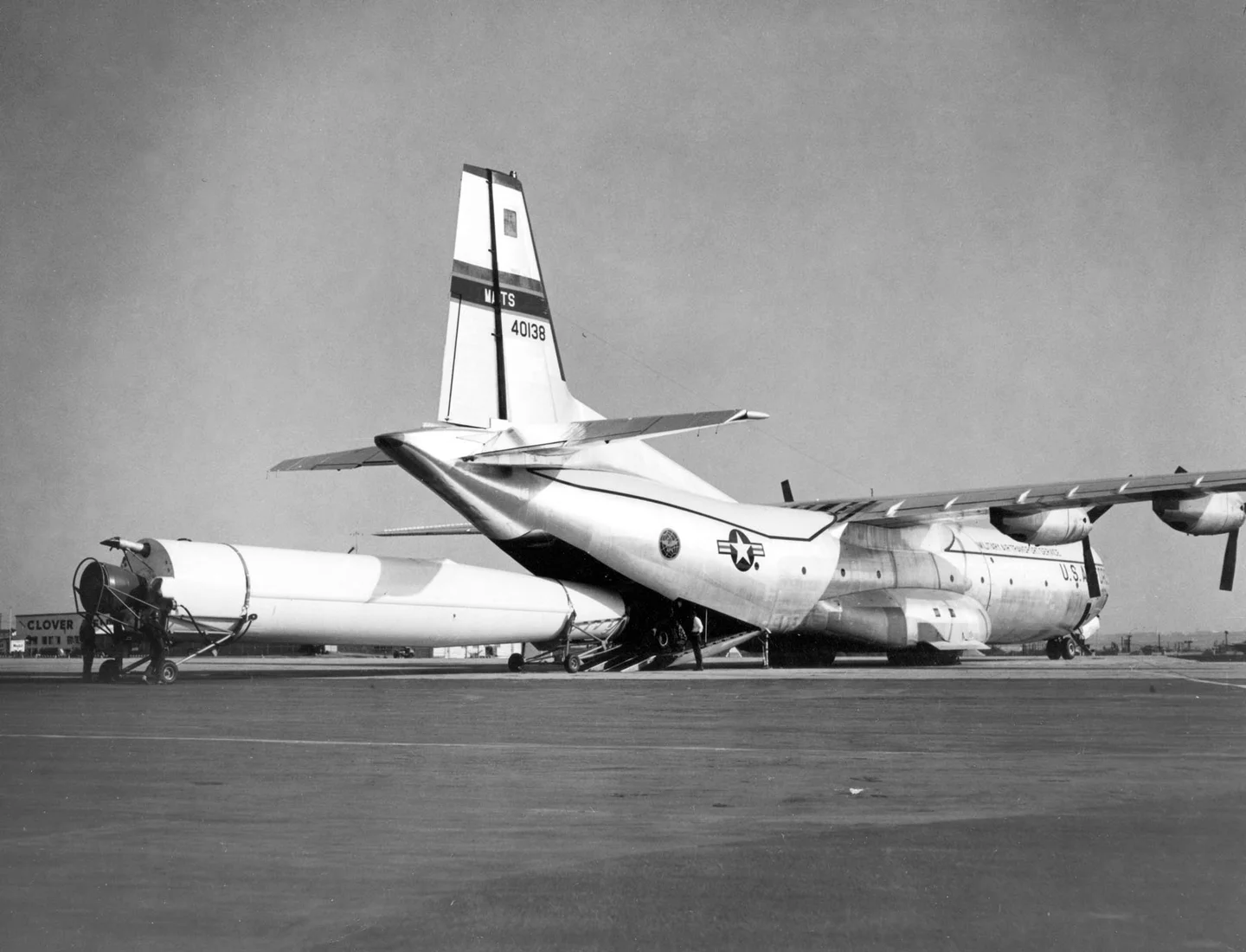
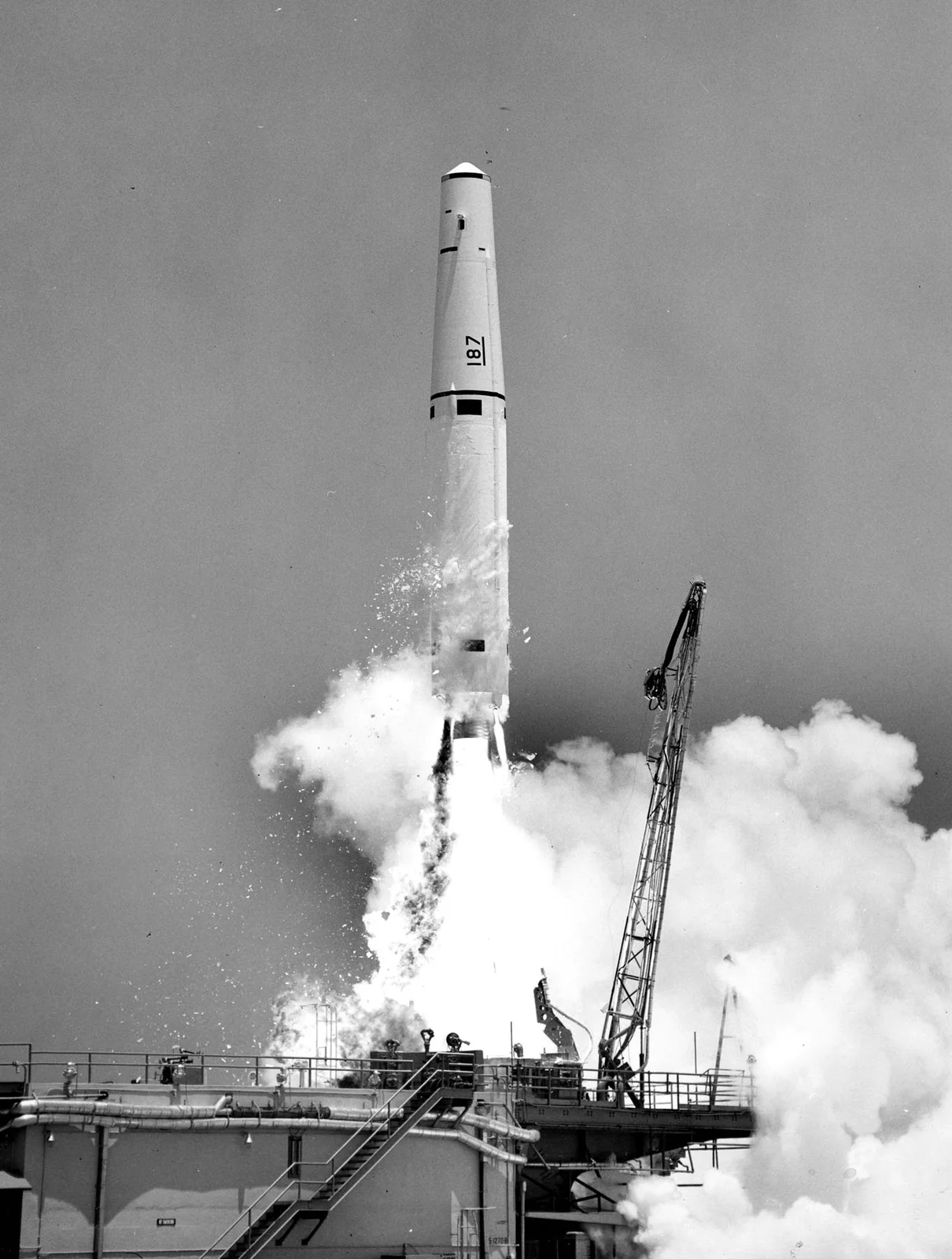
Thor was a liquid-propellant missile. Its kerosene-based fuel and liquid oxygen oxidiser supplied the engine for the powered part of the flight; the warhead then continued towards its target on a ballistic trajectory. Liquid oxygen required handling and replenishment, so the missile’s readiness depended on its supporting equipment and trained crews as well as the rocket itself.
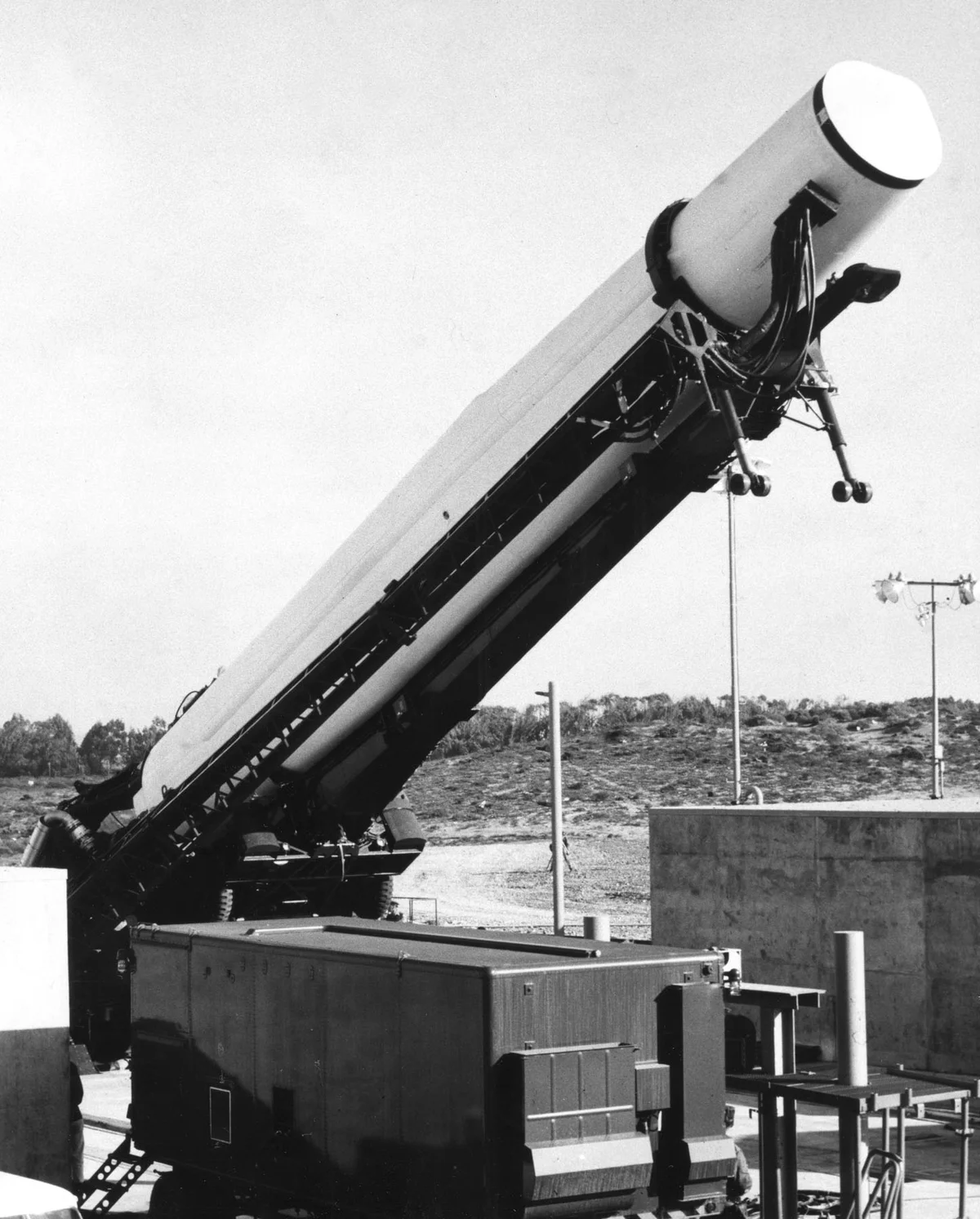
The British installations were exposed launch positions rather than buried silos. Each station’s three missiles needed control facilities, maintenance, security and American warhead custodians. Their visibility and fixed locations made vulnerability an important part of the deterrent calculation.
Sources for this passage: [1] [4] [5]What the October alert meant in Britain
The RAF’s published account records fifty-nine of the sixty Thor missiles at fifteen-minute readiness during the crisis. This described a preparation state, not an order to launch. Political authorisation and the British–American control arrangements remained essential.
The force operated alongside Bomber Command’s aircraft. A war spreading to Europe could have involved these British bases even if its first shots were fired in the Caribbean. The separate Thor chapter follows the crews, four station groups, testing programme and surviving launch sites in more detail.
Sources for this passage: [6] [2]More views