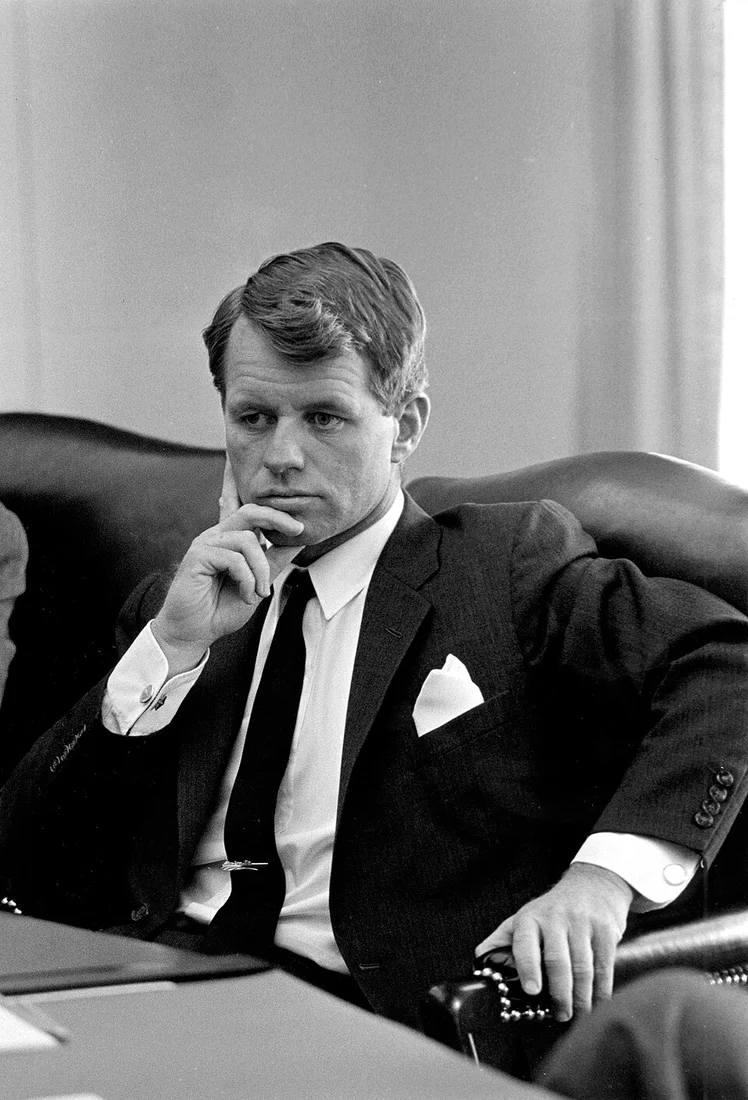


Background and position
Robert Kennedy was the president’s younger brother as well as Attorney General. He had worked as a lawyer and Senate committee counsel and managed John Kennedy’s 1960 presidential campaign. Those roles gave him an unusual combination of formal office and personal access to the president.
Sources for this passage: [1]Role in October 1962
Robert Kennedy opposed an unannounced attack in the early discussions and met Soviet ambassador Anatoly Dobrynin on 27 October. That private channel conveyed the urgency of a settlement and the assurance concerning Jupiter missiles in Turkey. His surviving memorandum must be read with its editorial notes and other accounts.
His mission to Dobrynin was especially sensitive because the Turkish missiles involved a NATO ally. The private message offered a way to remove them without announcing a public exchange under Soviet pressure. It also conveyed that the time available for a peaceful resolution was running out.
Sources for this passage: [2] [3] [4]What happened at the Justice Department
On 27 October, after a request from Rusk, Robert Kennedy telephoned Dobrynin to arrange an evening meeting at the Justice Department. He warned that time was running out and that continued attacks on reconnaissance aircraft could bring an American response. The conversation carried both the threat of military action and the possibility of a settlement.
His memorandum was written on 30 October, after the immediate danger had eased. Its wording denied a formal trade over Turkey, while the editorial record and Khrushchev’s private letter document the confidential removal assurance. Comparing those records is more revealing than presenting either one alone as the whole negotiation.
Sources for this passage: [3] [5]Why their role matters
Robert Kennedy’s role is best reconstructed from both sides of the exchange. His memorandum and its editorial history show why a single American account cannot tell the whole story. His influence rested on presidential trust, but the settlement also required Dobrynin to transmit a message that Moscow would understand and accept.
Sources for this passage: [3]