_underway_in_October_1962.jpg)
_underway_in_October_1962.jpg#Licensing)
- Navy:
- United States Navy
- 1962 designation:
- CVAN-65
- Type:
- Nuclear-powered aircraft carrier
- Role:
- Carrier air power and contingency readiness
Its place in the crisis
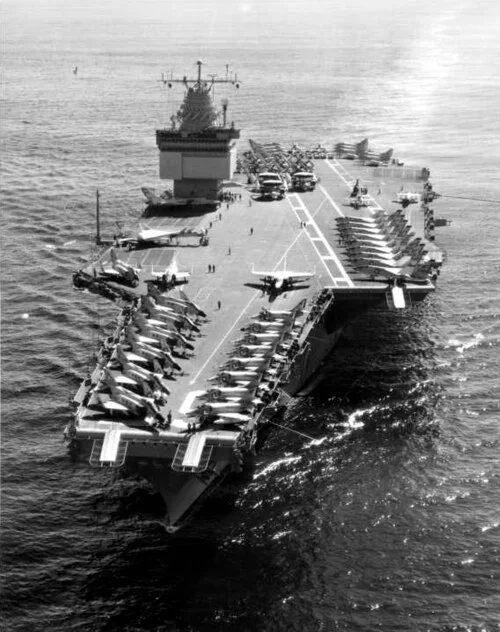
Enterprise brought a mobile airfield into the American deployment. Its operational history places it in the naval preparations and movements of October 1962.
The carrier force supported the possibility of action if diplomacy failed, while destroyers and other ships carried out interception and surveillance. “Nuclear-powered” refers to the ship’s propulsion; it should not be used as shorthand for a specific weapons load or a decision to use nuclear weapons.
Sources for this passage: [1]Putting to sea before the speech
Enterprise left Norfolk on 19 October with Carrier Air Group 6 embarked, three days before Kennedy told the public about the missiles. Its official history describes provisions normally requiring up to ten hours being loaded in about two. The speed of departure illustrates how preparations preceded the public confrontation.
The aircraft carrier was part of the force available if the crisis escalated. Its nuclear reactors powered the ship, but aviation still depended on aircraft, fuel, maintenance, weapons, deck crews and flight operations. Nuclear propulsion did not make the carrier independent of logistics.
Sources for this passage: [1]A different job from a boarding destroyer
The Navy’s 25 October operations summary places Enterprise and Independence with destroyers south of Guantánamo. That position belonged to the wider military deployment, while other ships occupied quarantine stations and intercepted merchant traffic.
Carrier air power gave Washington options beyond inspecting cargo. It also created forces that had to be protected against Soviet submarines. The naval crisis therefore included both pressure on incoming shipping and preparations for a much wider conflict.
Sources for this passage: [2] [1]