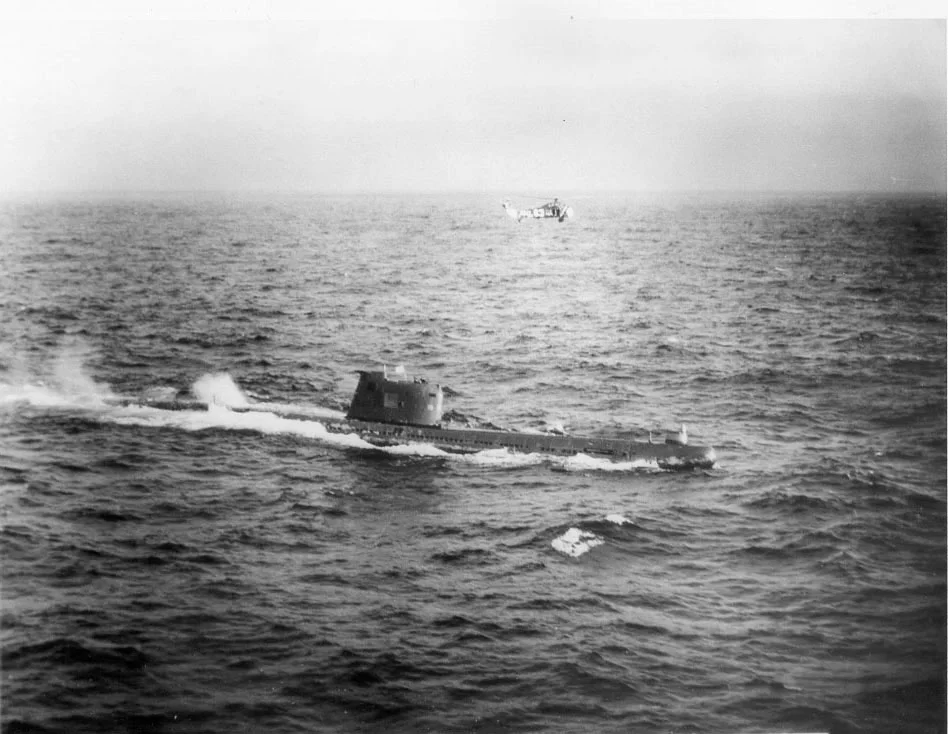


- Navy:
- Soviet Navy
- Type:
- Project 641 / Foxtrot-class submarine
- Propulsion:
- Diesel-electric, not nuclear-powered
- Key date:
- 27 October 1962
Its place in the crisis
B-59 was one of four Soviet submarines sent across the Atlantic. American ships tried to make it surface using explosive signals. Its crew faced heat, battery limitations and uncertain communications.
The boat carried a nuclear torpedo, something the American forces did not know. “Nuclear-armed” and “nuclear-powered” describe different things: its weapon was nuclear, its propulsion was not.
Later testimony describes Arkhipov’s restraining role, but accounts of the exact deliberations differ. The evidence supports a dangerous encounter without requiring an invented, word-for-word scene inside the submarine.
Sources for this passage: [1]Why staying submerged became difficult
A diesel-electric boat used batteries while submerged and needed access to air to run its diesels and recharge. Prolonged pursuit therefore put pressure on both endurance and the crew. In tropical conditions, rising heat and poor ventilation compounded exhaustion, while intermittent communications limited the information available about events outside.
Captain Valentin Savitsky commanded B-59. Vasily Arkhipov, a senior officer of the submarine detachment, was also aboard. Later accounts describe an argument about the situation and nuclear use, but the familiar dramatic story of a precise three-man vote is less secure than the basic facts of the pursuit, nuclear weapon and decision to surface.
Sources for this passage: [1]What an American log records
Beale’s 27 October deck log records a group of destroyers investigating a submarine contact, acoustic challenges and the dropping of five hand grenades as an identification signal. Later that evening it records a Foxtrot submarine surfacing, followed by aircraft illumination and photography.
This contemporary record supplies the external sequence; it cannot reveal what Soviet officers said inside the boat. Read alongside the Soviet recollections, it helps explain how signals intended to force identification could be experienced as a hostile attack.
Sources for this passage: [2]