.jpg)
.jpg#Licensing)
Background and position
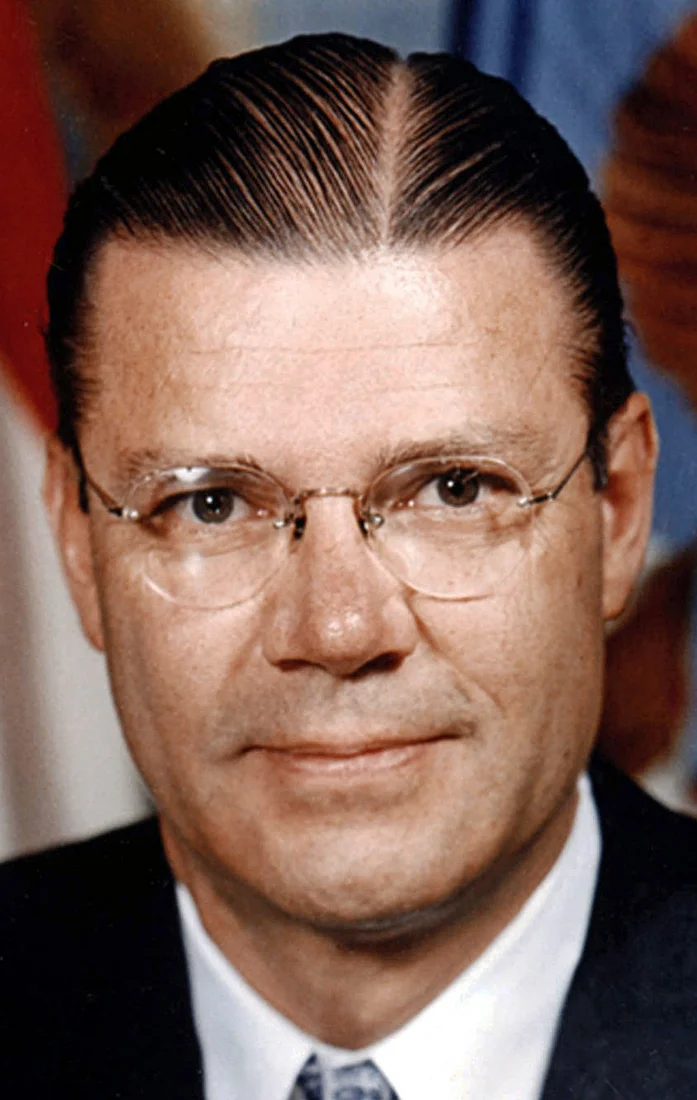
McNamara came to the Pentagon from Ford, where he had risen to company president. He brought experience of statistical analysis and large organisations, including wartime work, into defence management. Kennedy appointed him Secretary of Defense in 1961.
Sources for this passage: [1]Role in October 1962
McNamara supported the quarantine as the initial response but also prepared for air strikes and invasion. His position cannot be reduced to opposition to force: the records show him discussing both escalation risks and large military operations. He helped translate political decisions into operational instructions.
For him, the quarantine was both a military operation and a means of communicating pressure. Decisions about interception, reconnaissance and preparations for invasion could have political consequences far beyond their immediate operational purpose. The defence secretary had to keep those consequences in view while forces prepared for combat.
Sources for this passage: [2] [3]Limited force was a starting position
On 20 October McNamara argued that the quarantine would need to be followed by negotiations and that Washington should expect to offer something in return. He also warned that an air attack could leave missiles intact and escalate into invasion. His case was about managing the sequence and risks of action, not simply avoiding military preparation.
By the 27 October meeting, with reconnaissance aircraft under fire, he discussed a major air operation and the reserves needed for invasion. His position illustrates why fixed labels such as “hawk” and “dove” can mislead: an advocate of the initial quarantine could still prepare for large-scale fighting if it failed.
Sources for this passage: [4] [3]Why their role matters
He remained defence secretary under Lyndon Johnson and later led the World Bank from 1968 to 1981. His later reflections on nuclear danger are valuable, but they should be compared with the 1962 records: hindsight and knowledge of Soviet tactical weapons changed the way participants understood the risks they had taken.
Sources for this passage: [1] [5]