.jpg)
.jpg#Licensing)
Background and position
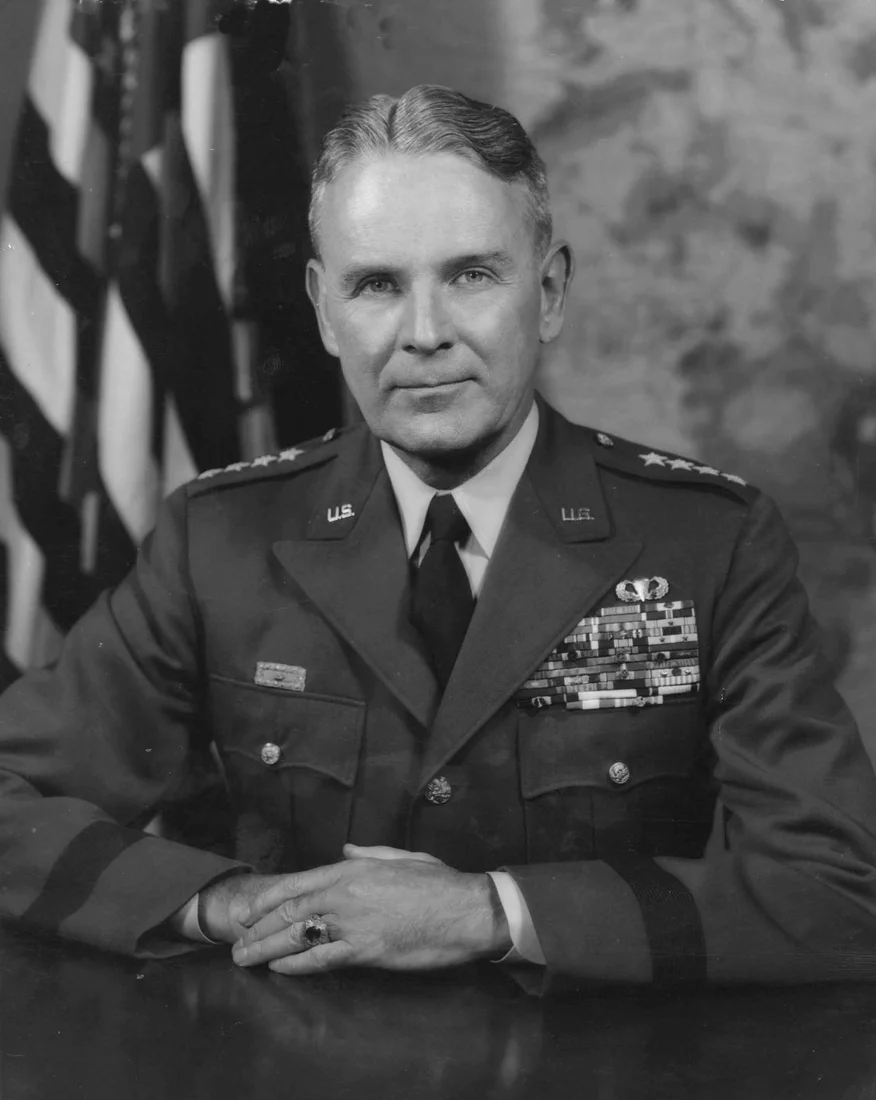
Taylor had commanded the 101st Airborne Division during the Second World War and later served as Army Chief of Staff. Kennedy appointed him Chairman of the Joint Chiefs on 1 October 1962, only weeks before the crisis. He had already been serving as the president’s military representative.
Sources for this passage: [1]Role in October 1962
Taylor communicated plans for air strikes and invasion to Kennedy and his advisers. On 27 October he reported the Joint Chiefs’ recommendation for a major attack if the missiles were not neutralised. The record shows how a proposed limited response could develop into a much larger operation.
The chairman had to convey a collective military recommendation rather than speak only for one service. Air attacks raised questions about incomplete destruction of the missiles, follow-up operations and the possible need for invasion. Military planning therefore extended well beyond a single strike.
Sources for this passage: [2] [3]Why their role matters
Taylor’s career continued as ambassador to South Vietnam in 1964. In the Cuban crisis, his importance lies in the link between presidential deliberation and plans for large-scale combat. Those plans were real alternatives whose likely consequences helped shape Kennedy’s search for a settlement.
Sources for this passage: [1] [3]