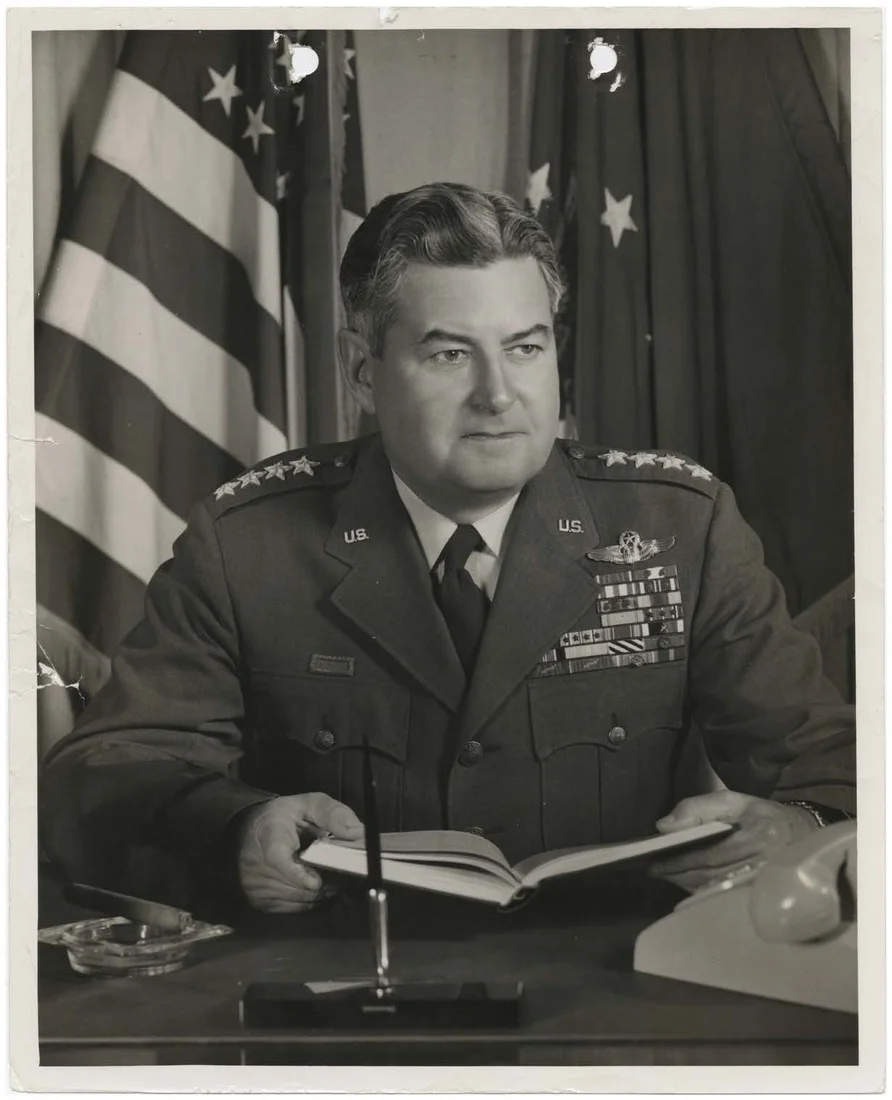


Background and position
LeMay was a career airman with extensive bomber experience. He led the 305th Bombardment Group into combat in Europe and later became one of the most prominent figures in American strategic air power. As Air Force Chief of Staff in 1962, he approached Cuba with a strong belief in the effectiveness of force.
Sources for this passage: [1]Role in October 1962
LeMay challenged the quarantine policy during Kennedy’s recorded meeting with the Joint Chiefs on 19 October. He believed a forceful attack was necessary and used the memory of appeasement to argue his case. Kennedy continued to question what the Soviets might do elsewhere in response.
His disagreement with Kennedy can be heard in the 19 October recording. LeMay treated the missiles as a threat requiring decisive removal, while Kennedy pressed him on how an attack might affect the confrontation elsewhere. Their exchange exposes different assumptions about what the Soviets would do next.
Sources for this passage: [2] [3]Why their role matters
His forceful recommendation was influential advice, not an order binding the president. The episode helps distinguish professional military advocacy from political authority: Kennedy had to decide whether a proposed operation served the wider objective of removing the missiles without starting a general war.
Sources for this passage: [3]