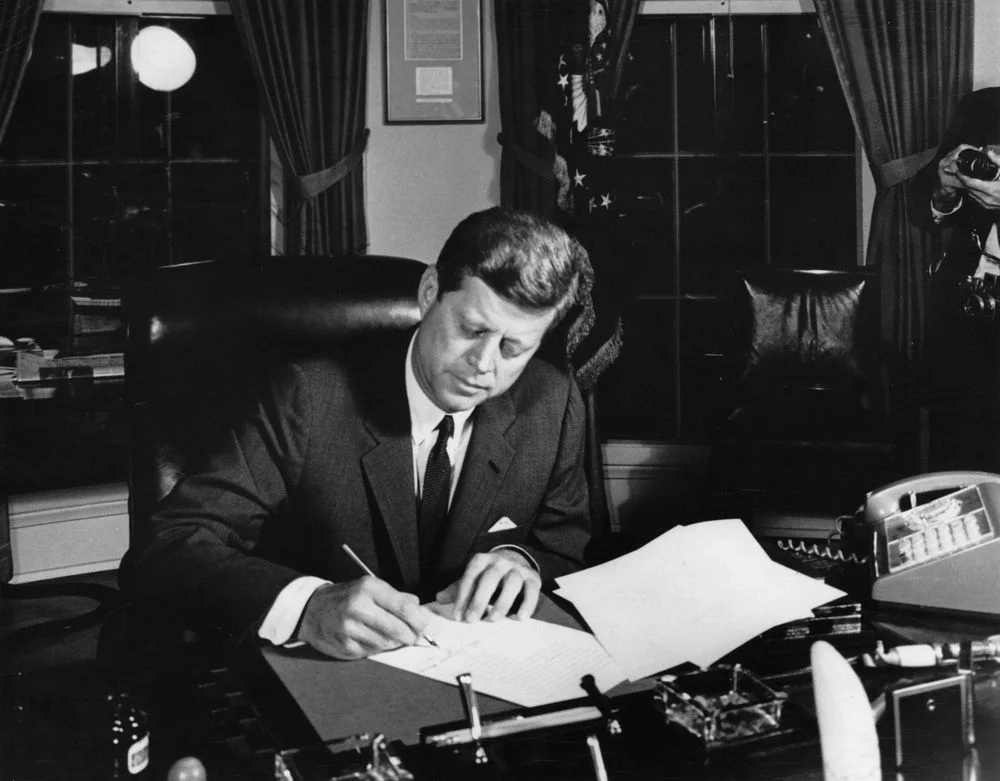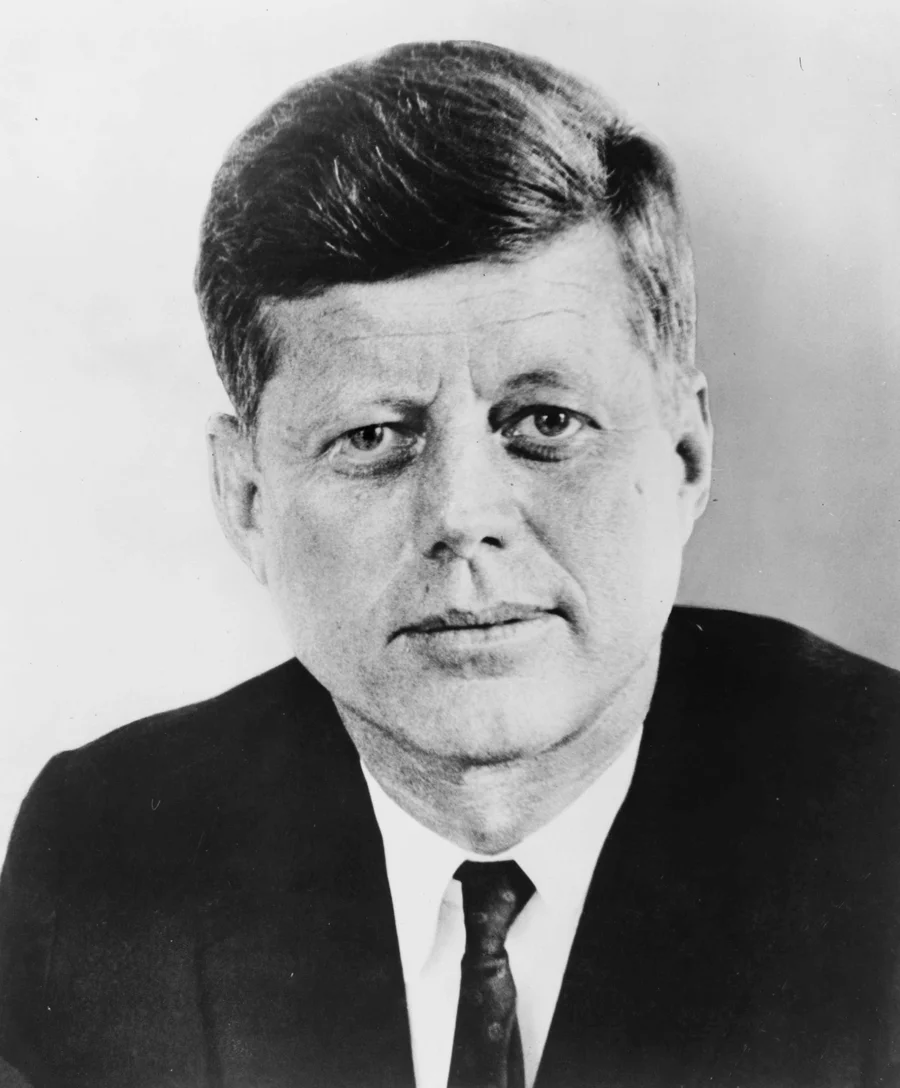


Background and position
Before entering the White House in January 1961, Kennedy had served in the US Navy during the Second World War and represented Massachusetts in Congress. His presidency inherited a confrontation with the Soviet Union that extended from Europe to newly independent countries. Cuba became an early test when the American-backed Bay of Pigs invasion failed in April 1961.
That experience mattered in October: Kennedy needed to judge military advice while considering what an American attack might set in motion. The missiles challenged his public warnings to Moscow, but destroying them by force could also bring retaliation against West Berlin or a wider nuclear exchange.
Sources for this passage: [1] [2]Role in October 1962
Kennedy chose a naval quarantine while keeping military options open. He repeatedly questioned how action in Cuba might trigger Soviet retaliation elsewhere. On 27 October he pursued a settlement despite the loss of an American U-2, balancing alliance politics against the danger of a wider war.
The quarantine gave Kennedy a visible response that could be tightened while negotiations continued. He retained plans for air strikes and invasion, so diplomacy took place under real military pressure. His televised address on 22 October turned a week of secret deliberations into a public international emergency.
Sources for this passage: [3] [2]Choosing time, then accepting a bargain
On 20 October Kennedy approved the quarantine while keeping preparations for an air strike and invasion under way. Its purpose was to put pressure on Moscow without making the first move a surprise attack. The choice left a serious problem unresolved: the missiles already in Cuba could become more ready while talks continued.
On 27 October he resisted treating the loss of Anderson’s U-2 as an automatic trigger for retaliation. He also challenged the idea that NATO’s sensitivities made the Turkish missiles impossible to discuss. The final outcome depended on his willingness to combine a firm public demand with a private concession, rather than secure withdrawal through military pressure alone.
Sources for this passage: [4] [2] [5]Why their role matters
His achievement was to keep a path to agreement open on 27 October. It was also a settlement involving concessions: an American non-invasion assurance and a private undertaking concerning the Jupiters in Turkey. The episode should therefore be read as a negotiated escape from danger, rather than a victory secured by threats alone.
Sources for this passage: [6] [7]