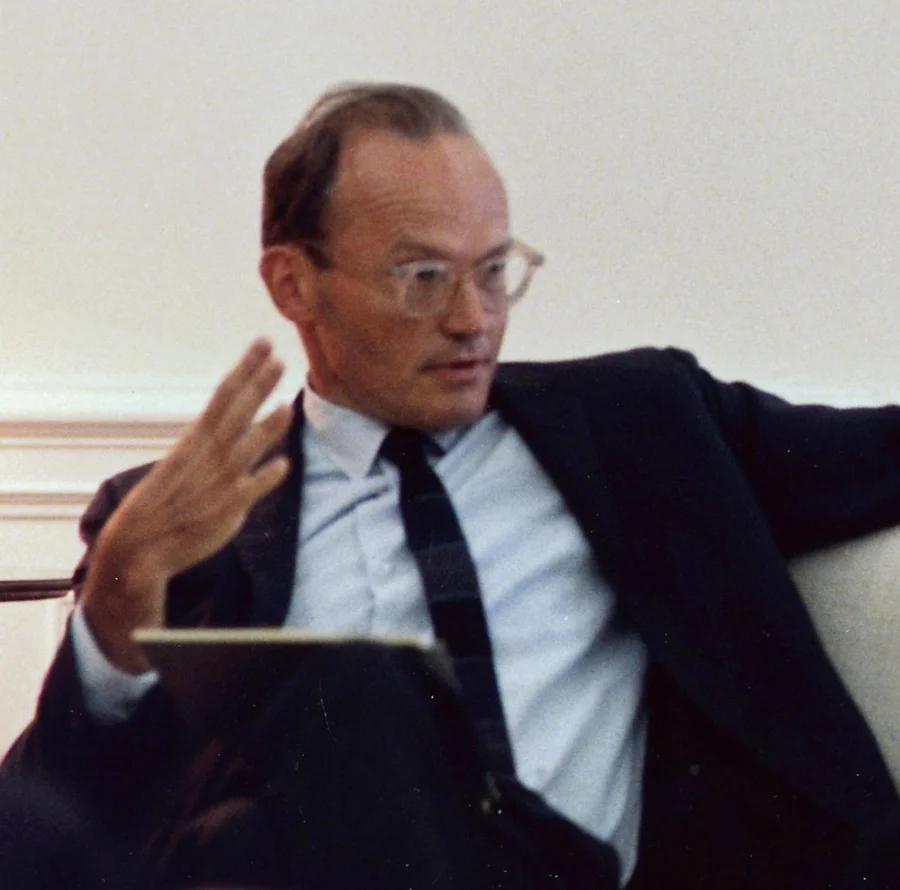


Background and position
Bundy arrived in government from Harvard, where he had been a dean. As the president’s adviser for national security affairs, he worked at the junction between the White House, State Department, Pentagon and intelligence agencies. That position gave him influence over the questions and recommendations reaching Kennedy.
Sources for this passage: [1] [2]Role in October 1962
Bundy participated in the debate over a blockade and air strikes, arguing for decisive military action on 19 October. Later he warned about the effects on NATO of appearing to trade Turkish missiles for those in Cuba. His changing arguments reveal the pressures within the White House deliberations.
On the Turkish missile issue, Bundy worried about the credibility of American commitments to allies. A bargain that looked reasonable as a military exchange could appear to NATO governments as a decision about their security made over their heads.
Sources for this passage: [3] [4]From the strike alternative to the NATO question
At the 20 October meeting, Bundy presented the air-strike alternative for the President to consider. The existence of competing papers mattered: the President was comparing courses of action with different military and diplomatic consequences, rather than endorsing a unanimous recommendation.
On 27 October, Bundy warned of the reaction in NATO if withdrawal from Cuba appeared to be purchased with the missiles in Turkey. Kennedy answered that rejecting discussion and then taking military action would also put Washington in a difficult position. This disagreement captures the tension between alliance credibility and the immediate need to prevent war.
Sources for this passage: [5] [4]Why their role matters
His profile illustrates why ExComm did not divide neatly into two fixed camps. Advisers changed emphasis as the situation developed, and military, diplomatic and alliance arguments overlapped. Reading Bundy’s early arguments beside the final-day discussions makes that movement visible.
Sources for this passage: [3] [4]