
Background and position
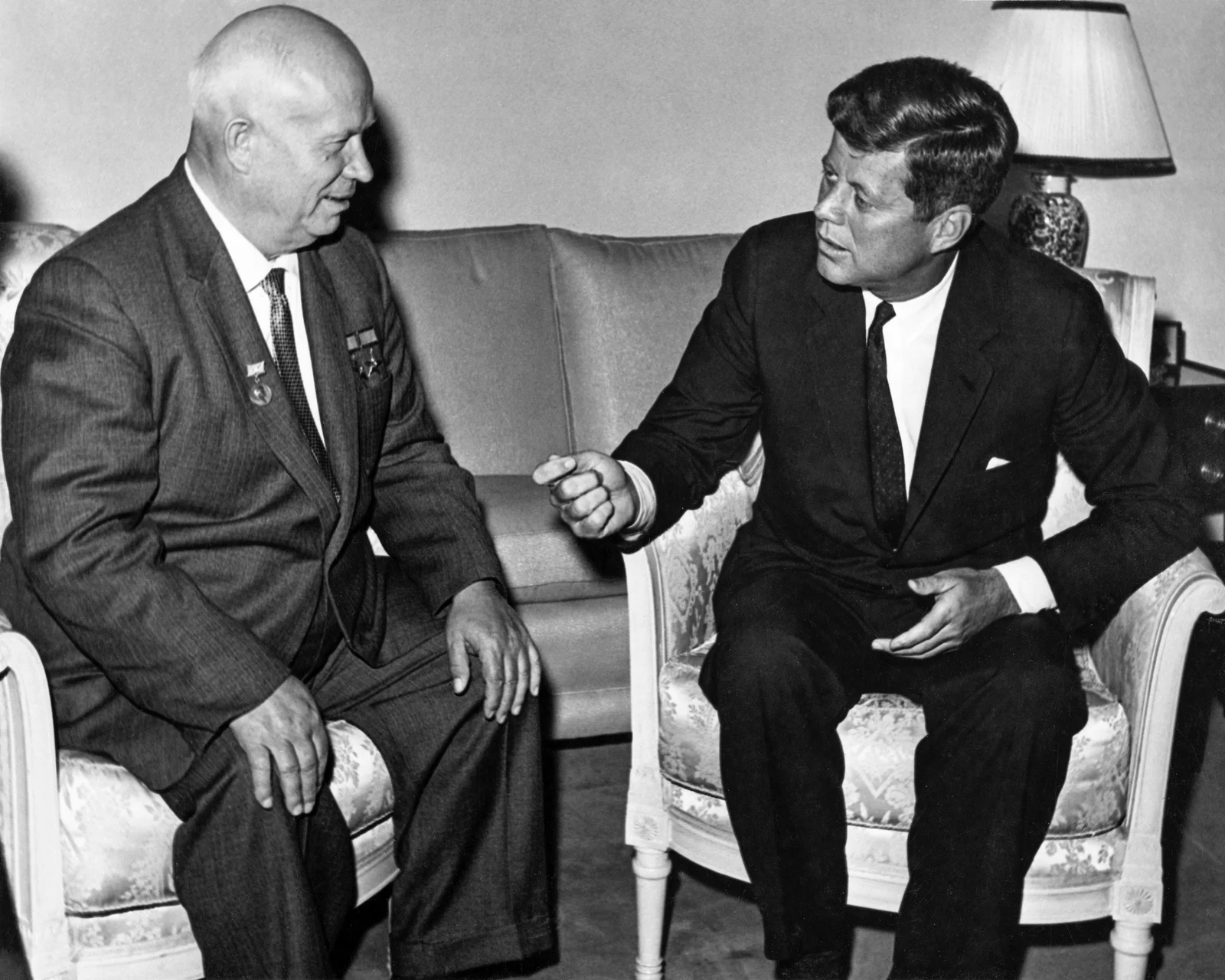
Khrushchev combined leadership of the Soviet government with leadership of the Communist Party. Cuba offered him both a vulnerable socialist ally to protect and a way to challenge American strategic advantages. His meetings with the Castro brothers show that Cuban leaders were asking what Soviet promises would mean if the United States invaded.
Sources for this passage: [1] [2]Role in October 1962
Khrushchev sought to strengthen Cuba’s security and the Soviet strategic position. His correspondence with Kennedy moved between accusation, warning and compromise. On 28 October he accepted the withdrawal of the missiles; the settlement also depended on private assurances and further negotiations after the public announcement.
The messages of 26 and 27 October did not present identical terms. The first offered a route based on removing the missiles and an American assurance against invasion; the later public message explicitly raised the American missiles in Turkey. Kennedy’s response and the private embassy channel allowed these issues to be handled differently.
Sources for this passage: [3] [4] [2]Two messages and a decision to withdraw
His 26 October letter linked a settlement to ending the threat of invasion of Cuba. The following day’s public message explicitly demanded the removal of American missiles from Turkey as a counterpart to Soviet withdrawal. The change sharpened Kennedy’s problem because it brought NATO’s credibility into a dispute already close to war.
Khrushchev’s private letter of 28 October records that Dobrynin had reported the Turkish assurance from Robert Kennedy, including a four-to-five-month timetable. He agreed to keep that issue confidential. His public announcement could therefore omit a concession that had nevertheless helped make acceptance possible.
Sources for this passage: [5] [6] [7]Why their role matters
Khrushchev’s withdrawal decision reduced the immediate danger of war but angered Castro, who had not been a party to the bargain. Soviet–Cuban negotiations continued in November. Following those negotiations is essential to understanding the limits of his control over an ally whose security was directly at stake.
Sources for this passage: [3] [8]