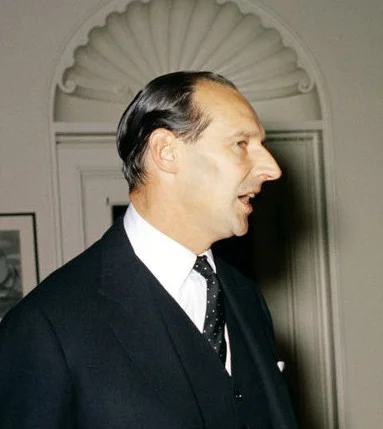


Background and position
Ormsby-Gore served as Britain’s ambassador in Washington and had unusually close personal access to Kennedy. His later oral history, recorded under his title Lord Harlech, provides a participant’s recollection of that relationship. The contemporary diplomatic records remain essential for checking the timing and substance of particular exchanges.
Sources for this passage: [1] [2]Role in October 1962
Ormsby-Gore conveyed British views in Washington, including Lord Home’s assessment of the crisis and its aftermath. The published record of his November meeting with Rusk shows an alliance still working through the implications. His diplomatic role complemented Macmillan’s direct exchanges with Kennedy.
An ambassador’s work included carrying assessments between governments and explaining an ally’s concerns in terms the other side could use. Ormsby-Gore’s contact with Rusk complemented, rather than replaced, the direct telephone channel between the prime minister and president.
Sources for this passage: [2] [3]Why their role matters
His role shows how British influence could operate through consultation without control of the final decision. Access to American leaders was valuable, but Britain was not one of the two governments exchanging the decisive missile-withdrawal assurances. That distinction is central to assessing the “special relationship” during the crisis.
Sources for this passage: [2] [3] [4]