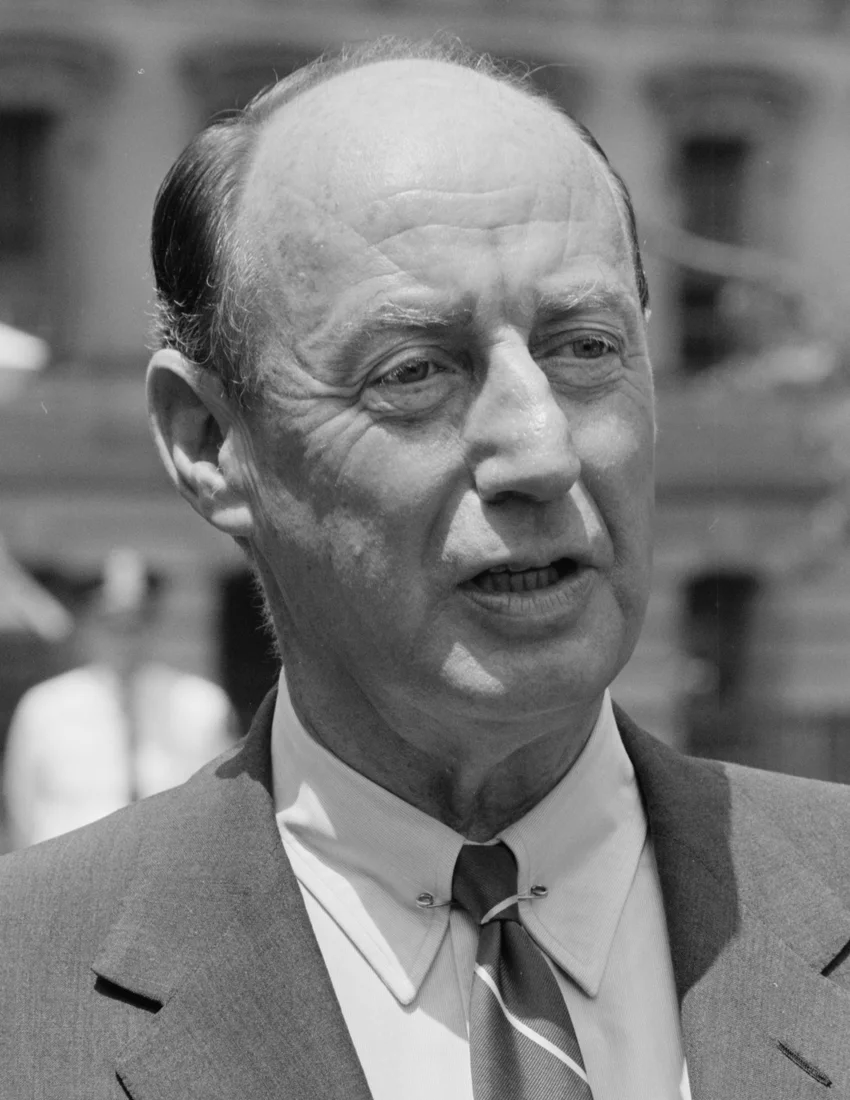


Background and position
Stevenson had been governor of Illinois and the Democratic presidential candidate in 1952 and 1956. Kennedy appointed him ambassador to the United Nations in 1961. He brought national political standing to an organisation where the United States had to defend its actions before a global audience.
Sources for this passage: [1]Role in October 1962
Stevenson worked on possible settlements as well as presenting the American case. His 26 October report records detailed talks with U Thant about stopping construction, making missiles inoperable and arranging inspections. These practical issues mattered alongside the dramatic public confrontations at the United Nations.
The work behind his public advocacy included testing proposals for a pause and asking how missile construction and readiness could be checked. His talks with U Thant addressed the practical steps that would turn an offer into a verifiable arrangement.
Sources for this passage: [2] [3]Negotiation in private, evidence in public
Stevenson opposed a surprise air strike at the 20 October meeting and argued for a negotiated settlement. He was willing to discuss American concessions, including overseas bases, further than some colleagues wanted to go. Kennedy rejected giving up Guantánamo in that situation, demonstrating that support for diplomacy did not mean agreement on its price.
At the United Nations on 25 October, Stevenson took a much more confrontational public role, challenging Zorin and displaying the missile photographs. These were compatible tasks: make the evidence persuasive internationally while seeking a settlement that avoided an attack.
Sources for this passage: [4] [5]Why their role matters
Stevenson’s contribution joins two sides of diplomacy: explaining a government’s case in public and exploring terms in private. The negotiations in New York show why the UN was more than a stage for speeches, even though the final superpower bargain was made through other channels.
Sources for this passage: [3]